
Related Blogs & Resources


Building Safety Month: Best Practices and Tips for Roofers
May is Building Safety Month, which serves to bring attention to issues that affect everyone in the roofing and construction industries — as well as their customers.
As most roofers know, falls are the leading cause of death of workers. According to the U.S. Bureau of Labor Statistics (BLS), construction had the second-highest rate of occupational deaths (951) in 2021, with falls, slips and trips accounting for 370 fatalities.
And while worker well-being is always a priority, Building Safety Month stresses the importance of so much more.
Campaign for Safety
According to the International Code Council (ICC), this year’s Building Safety Month campaign — “It Starts with YOU” — raises awareness about the role we all play in ensuring safety in the spaces in which we live, work and learn. It also makes the connection between building codes and our personal safety, as well as the important work done by building safety professionals in our communities.
To show how building safety impacts everyone on a personal, local and global level, the campaign established five themed weeks of education:
- Building Safety Starts at Home highlights how building safety impacts our everyday life as family members, friends and individuals at home.
- Building Safety Professionals and You shares a glimpse into the world of building safety professionals by outlining different roles and their responsibilities.
- Prepare Your Community focuses on how to protect not just your home, but your community at large, from disaster.
- Advocate for Your Community provides tips and tools needed to advocate for building safety in your community.
- Solving Challenges Together elevates Building Safety Month to a global scale by addressing how we can work together internationally to tackle the world’s most important issues.
Code of Con-struct
FEMA’s “Protecting Communities and Saving Money” report indicates that 65% of U.S. counties, cities and towns have not yet incorporated modern building codes.
“One of the most cost-effective ways to safeguard our communities against natural disasters is to adopt and follow hazard-resistant building codes,” the report states. “Not only are casualties reduced, but the cost of building damage is also reduced during a natural disaster. Building codes also help communities get back on their feet faster by minimizing indirect costs such as business interruptions and lost income.”
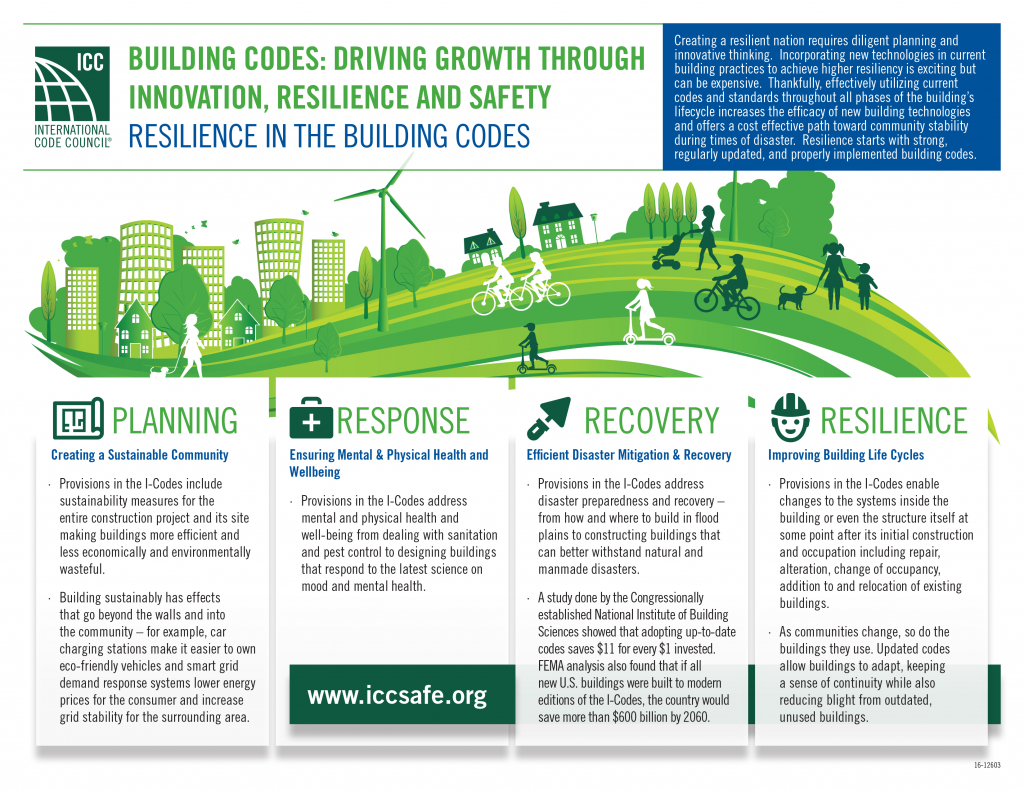
- Tip #1: Stay up to date on all building codes with the ICC at codes.iccsafe.org.
OSHA’s Top Safety Concerns in 2023
The Occupational Safety Health Administration (OSHA) is focusing on several specific safety concerns in 2023, which include increased fines and penalties, ladder liabilities and heat-related injuries.
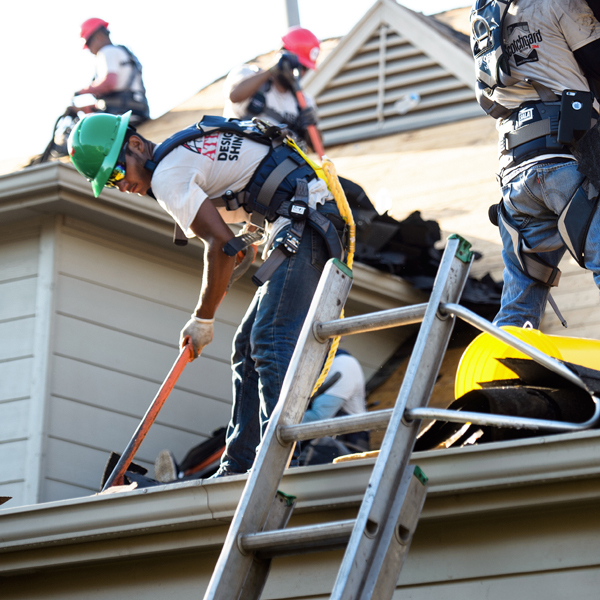
For roofers, fall protection is the biggest aspect of safety on a job site — and one of the common OSHA violations, with more than 5,200 citations handed out in 2022. In fact, lack of proper fall protection has topped OSHA’s top 10 list of the most-frequently cited workplace safety issues for 12 years straight.
New this year, OSHA “office directors were given the authority to issue ‘instance-by-instance citations’ for cases identified as ‘high-gravity’ serious violations.” Fines have also been increased to account for inflation.
- Tip #2: Assess your knowledge of proper fall protection by taking the “Roofing Industry Fall Protection from A to Z” test from the National Roofing Contractors Association and OSHA.
And speaking of falling, according to the BLS, ladders were the primary source of 161 job-site deaths and nearly 23,000 injuries in 2020.
In 2022, OSHA issued more than 2,100 citations for ladder violations.
“OSHA is really good at spotting from a distance the proper ladder angle, and if there are questions, they’re going to pull the tape on it,” explains Tammy Clark, OSHA-trained safety consultant.
According to Clark, the most common issues she sees are improper setup, side rails not extending a minimum of 3 feet and improper use (e.g., using the wrong type of ladder or overreaching).
- Tip #3: Learn about ladder safety and how to avoid ladder citations in this video with Roofing Contractor Magazine Publisher Jill Bloom and Tammy Clark of Tammy K. Clark Companies.
Another major concern for OSHA this year is heat safety, for which it reassessed key rule-making factors in late 2021, including heat-acclimatization planning, heat-stress thresholds and heat-exposure monitoring. In April 2022, the agency launched its first campaign — the National Emphasis Program (NEP) — emphasizing the potential dangers and ways to prevent heat-related illnesses.
- Tip #4: Brush up on some of the ways you and your crew can prevent heat-related illnesses by reading our article “Turning Up the Heat.”
A Disregard for Safety Is a Disaster Waiting to Happen
As consumers, and customers of builders and roofers in particular, we expect our homes to keep us and our families safe. Yet, the majority of counties, cities and towns have not adopted modern building codes, leaving us vulnerable to potential disaster.
Remember the Champlain Towers South condominium building in Surfside, FL, that collapsed in June 2021, killing 98 people?
According to the Miami Herald, an investigation into the tragedy “revealed design failures, shoddy construction damage and neglect that lined up like dominoes to create the perfect conditions for a deadly chain reaction.”
The article continues: “Champlain South was completed on Dec. 12, 1981, after building department officials, inspectors and private engineers all certified it was safe, built to plan and code compliant. It wasn’t.”
It was discovered that the architect and structural engineer who designed the building had histories of cutting corners, which included the engineer overseeing a previous job in which a parking garage was built with inadequate rebar that started failing almost immediately and the architect having his license suspended for “gross incompetence” when two billboards he designed blew over in a hurricane.
When other engineers reviewed the plans for the Champlain Towers post-collapse, they found flaws in the design and differences in the strength between structural elements that supported the tower that fell and the wing of the tower that remained standing. For example, the tower wing that survived was held up by 24x24-inch robust columns, whereas the other columns were less than half that size.
“Columns in the pool deck were the smallest,” the Herald states. “And even the slightly bigger columns under the part of the tower that collapsed were too small to safely accommodate all of the necessary steel reinforcement, violating code requirements at the time.”
And that’s only one of many blatantly poor structural issues that were found to have contributed to the collapse.
It’s Kind of a Big Deal
Just as “it takes a village to raise a child,” it also takes a village to build homes and install roofs. And the safety of the families living in those homes, under those roofs is in the hands of every villager, dependent on their compliance to follow codes.
As a roofing manufacturer, we can do everything right in creating structurally sound products, but if one worker neglects to properly install the underlayment, shingles or ventilation, that misstep can cause product failure that creates a domino effect (e.g., a leak that becomes a hole in the ceiling that leads to mold, etc.).
Building safety is the responsibility of each and every one of us in this industry.
That’s why, in addition to the safe practices we follow in our facilities during the manufacturing process, we provide contractors and their crews with the information they need for successful, proper installations.
- Tip #5: Visit the Literature section of Atlas Roofing’s website to learn everything you need to know about our products, including data sheets, installation instructions and specifications.
As we observe Building Safety Month, let’s continue to do our jobs as if our own families’ lives depend on it — because everyone deserves to be safe in their homes.


 Gear!
Gear! PRO LOGIN